
We are happy and proud that ReForm is moving into its second project phase.
We will celebrate this on November 2 from 3:00 to 6:00 p.m. in the auditorium of the German Mining Museum with, among other things, a keynote lecture on the topic “Spaces of Digitalizing Societies” by Prof. Dr. Theodore Schatzki, Professor of Geography, Philosophy, and Sociology at the University of Kentucky.
Programm
3:00 p.m. – Welcome
Opening remarks by Prof. Dr. Thomas Stöllner
Review of ReForm Phase 1 and outlook for Phase 2 by Prof. Dr. Thomas Stöllner
Keynote address: “Spaces of Digitalizing Societies” by Prof. Dr. Theodore Schatzki
Followed by a reception
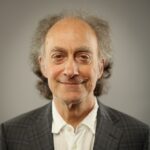
Prof. Dr. Theodor Schatzki
Books
Social Pracitces (1999), The Site of the Social (2002), Martin Heidegger: Theorist of Space (2007), The Timespace of Human Activity (2010), Social Change in a Material World (2019) and This but Not That. On what is and is not fundamentally new about digitalizing societies (02/2027).
Short profile
Born in 1956 in Boston, Massachusetts
Studied applied mathematics at Harvard University; earned a bachelor’s degree in 1977
Bachelor’s degree in philosophy from the University of Oxford in 1979
Master of Arts in philosophy from the University of California, Berkeley, in 1982
Ph.D. in philosophy from the University of California, Berkeley, in 1986
Postdoctoral fellow at Freie Universität Berlin from 1982 to 1983
Since 1986, he has held various positions at the University of Kentucky
Research Areas
Schatzki focuses primarily on the theorization of social life and on the theory of practice. The latter plays an important role today not only in the social sciences but also in the research fields of the scholars participating in ReForm, including those from anthropology, archaeology, history, and geography. In his work, he examines how social practices, spatial structures, and material conditions shape social relationships and processes of change.
His current research focuses primarily on the impact of digitalization, particularly through blockchain technology and algorithmic organization, on social structures and institutions.
Spaces and Digitalizing Societies – Abstract
The talk argues that analyzing digitalizing societies does not require concepts of space—e.g., digital space, cyberspace—beyond those needed to analyze pre-digitalizing societies.
The talk begins by explicating the virtual character of what people see on computer screens. It then argues that at least three concepts of space are needed to analyze pre-digitalizing societies: physical space, local regions, and places. Turning to digitalizing societies, the discussion emphasizes the materiality of digitalization and the ways virtuality contributes to social change. Two concepts of space widely used to analyze digitalizing societies–cyberspace and topological space–are criticized. The talk concludes by showing how the three aforementioned concepts of space suffice for understanding the virtual spaces depicted on computer screens, for instance, on webpages and in games.
ReForm – Ressources in Transformation
ReForm’s research focuses on the transformative potential of georesources, aiming to unravel the processes that have led to substantial socio-environmental transformations throughout human history. Georesources keep societies in action, they act as affordances within human practices or as a discourse frame for desires, power and ideologies.
In our initial exploratory phase, the Leibniz Science Campus ReForm established a network of cooperating researchers and institutions (Deutsches Bergbau-Museum Bochum, Ruhr-Universität Bochum, FernUniversität in Hagen, technische Hochschule Georg Agricola) as well as a firm basis for its methodical and theoretical approaches.
ReForm’s main objectives in the second phase are: to consolidate and publish theoretical debate in a series of collaborative (digital) books on georesources; to apply middle-range theories of resource transformation and interwovenness to different empirical data sets; and to share our knowledge with the public.
What we have learned from our first phase is that it may be more rewarding to look upon historical failures than at historical successes.
The key concept to frame the work is to make “resources alive” and to extend this concept to other fields in the humanities and the sciences . Our cooperation now includes new PIs and institutions, such as the Frobenius-Institut für kulturanthropologische Forschung an der Goethe-Universität Frankfurt am Main, Institute of Climate and Energy Systems (ICE) at Research Centre Jülich GmbH (Helmholtz Association), and the Research Centre “Human Interaction with Mineral Resources in Alpine Terrains” (HIMAT) at the University of Innsbruck.